

What Exactly Is SEO?
In today's digital-first world, simply having a website isn't enough. Your potential customers need to find you, and that's where Search Engine Optimization (SEO) comes in. SEO is the practice of strategically enhancing a website to increase its visibility in search engine results pages (SERPs), with the goal of attracting more organic (non-paid) traffic. It’s about making your site more understandable to search engines and more valuable to users, ultimately boosting your digital footprint. This comprehensive guide will break down what SEO is, why it's so critical, and how you can leverage it to create a significant impact on your business in 2026.
Why Is SEO an Essential Strategy for Digital Growth?
SEO is the process of making your website easy for search engines to find, crawl, and index, helping it appear prominently when users search for relevant keywords. Unlike paid advertising, SEO focuses on organic traffic—users who find your site naturally through search engines. This traffic is often higher quality and more likely to convert because these users are actively seeking solutions to a problem or answers to a question. In 2026, the digital landscape is more competitive than ever, and users rarely venture past the first page of search results. This makes SEO a vital investment for being seen, capturing attention, and reaching potential customers. It's not a short-term campaign but a long-term, sustainable strategy for digital growth. A successful SEO strategy builds brand awareness, expands your customer base, and delivers a strong return on investment (ROI) by solidifying your company's online presence.
How Do Search Engines Rank Websites?
Search engines use complex algorithms to organize the vast amount of information on the internet. The process for major search engines like Google involves three primary stages:
- Crawling: Search engine bots, also known as spiders (like Googlebot), discover new and updated pages by following links across the web. These bots systematically explore your site to gather information about its content.
- Indexing: After a page is crawled, its content and structure are analyzed and stored in a massive database called an index. The indexing process helps the search engine understand what your page is about. If a page isn't indexed, it can't appear in search results.
- Ranking: When a user performs a search, the engine scours its index for the most relevant and high-quality pages to answer the query. It then ranks these pages based on hundreds of factors, including keyword relevance, site speed, mobile-friendliness, and backlink quality.
To optimize for this process, SEO is broken down into four main components:
- Technical SEO: This ensures your website's infrastructure is optimized for crawling and indexing. It covers elements like site speed, mobile-friendliness, SSL certificates (HTTPS), XML sitemaps, and structured data.
- On-Page SEO: This involves optimizing the content and HTML source code of individual web pages. Key elements include title tags, meta descriptions, URL structures, keyword usage, image alt text, internal linking, and header tags (H1, H2, H3).
- Off-Page SEO: This focuses on external factors that build your website's authority and trustworthiness. While backlinks from other reputable sites are the most significant factor, off-page SEO also includes brand mentions, social media signals, and online reputation management.
- Content SEO: This is centered on creating high-quality, valuable, and original content that matches user search intent. It starts with keyword research and extends to developing a content strategy that includes blog posts, product pages, and informational guides.
How Can You Turn SEO Data into Actionable Insights?
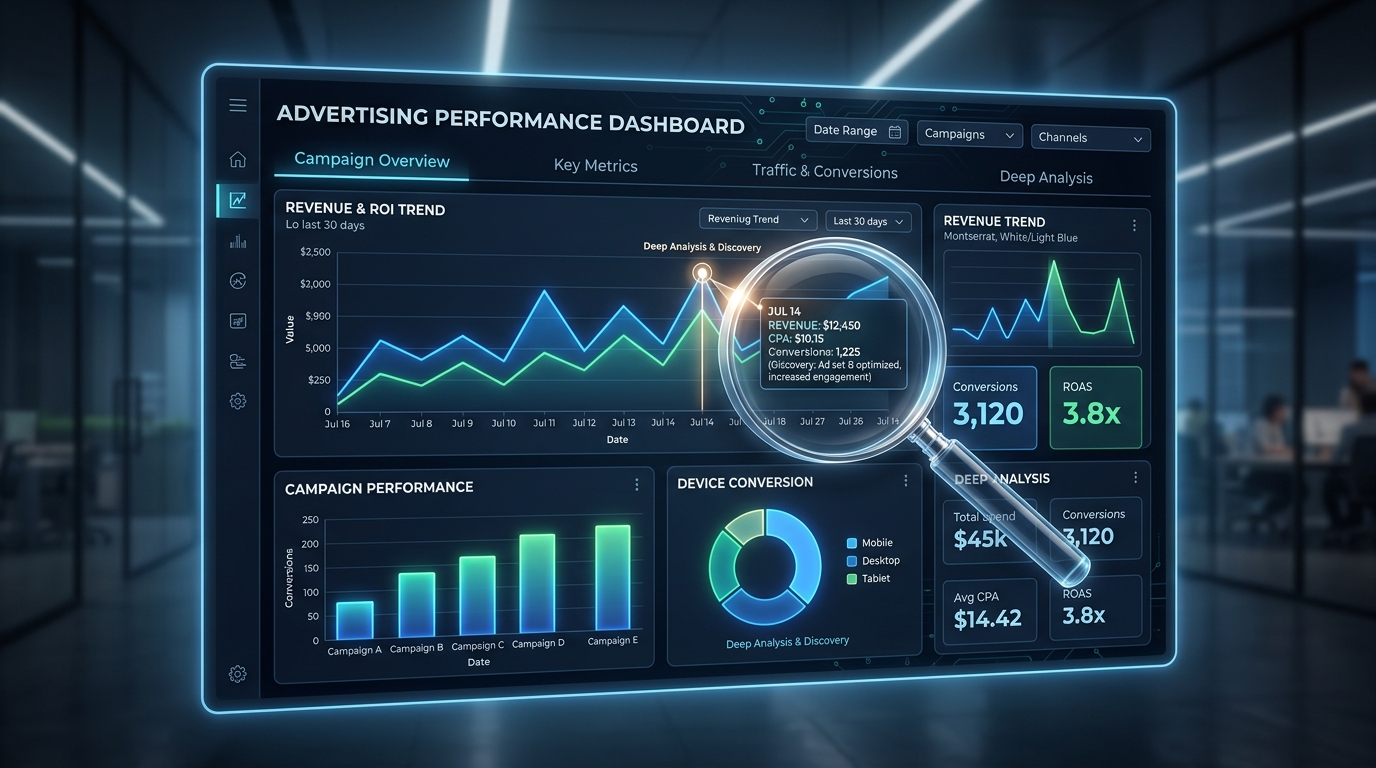
Measuring the success of your SEO efforts and making continuous improvements requires access to the right data and the ability to interpret it correctly. Metrics like clicks, impressions, click-through rate (CTR), average position, sessions, users, and conversions are all indicators of how effective your strategy is. For most businesses, this valuable data is scattered across different tools like Google Search Console and Google Analytics 4. Manually combining, analyzing, and translating this data into a clear action plan is often a time-consuming and tedious process. This is where Naklov, an AI-powered marketing platform, and its SEO Statistics Dashboard come into play. The Naklov SEO Statistics Dashboard consolidates key metrics from Google Search Console (clicks, impressions, CTR, average position) and Google Analytics 4 (sessions, users, source/medium, behavior) into a single, integrated interface. This allows you to monitor your SEO performance comprehensively, spot changes instantly with period-over-period comparisons, and dive deep into the data with detailed breakdowns by query, page, country, and device.
Stop Juggling Tabs. Start Making Decisions.
Tired of manually combining Google Search Console and GA4 data in spreadsheets? Naklov’s SEO Statistics Dashboard unifies all your critical metrics on a single screen.
- Get a unified view of GSC + GA4 data
- Receive AI-powered action items
- Track real-time traffic and get alerts
No credit card required. Connect your accounts in minutes.
How Does Naklov Solve Common SEO Challenges?
Businesses face numerous hurdles on their journey to improve digital visibility. The Naklov SEO Statistics Dashboard offers powerful, practical solutions to overcome these common challenges and streamline your workflow.
How can you instantly detect and react to traffic changes?
Failing to notice a sudden drop in website traffic can lead to lost leads and revenue. The Naklov SEO Statistics Dashboard sends you instant email alerts whenever there's a significant dip or spike in your site's traffic. This proactive approach allows you to identify and address issues—like a sudden drop in keyword performance—before your customers even notice, ensuring you can take corrective action immediately.
How do you get actionable insights from complex SEO data?
It's easy to get lost in mountains of data, making it difficult to decide what to do next. Naklov's integrated AI SEO analysis feature cuts through the noise. The dashboard not only presents data but also interprets the findings, provides tailored optimization recommendations for your site, and can even generate automated tasks. It gives you a clear action plan, answering the question, "What should I do now?" by showing you which keywords to target and which pages to optimize.
How can you simplify and speed up keyword research?
When planning new content or updating existing pages, you need to quickly assess a keyword's potential and search volume. This can be a slow, multi-step process. The Naklov SEO Statistics Dashboard simplifies this with a one-click search volume lookup directly from your data tables. This feature accelerates your content strategy and development, allowing you to instantly determine which keywords will drive the most traffic for a new product launch or blog post.
How can you understand what visitors are doing on your site right now?
Not knowing who is on your site, what pages they're viewing, or where they're from means you're missing out on real-time marketing opportunities. With the live visitor map in the Naklov SEO Statistics Dashboard, you get immediate answers to questions like how many people are on your site, which pages they're browsing, and their geographic location. This information is invaluable for regional campaigns and for gauging instant reactions to new content.
The Future of SEO: Why AI and User Experience Are Key for 2026
The world of SEO is constantly evolving. In 2026 and beyond, search engine algorithms will continue to be shaped by advancements in artificial intelligence and shifting user behaviors. Understanding these trends is crucial for building a future-proof SEO strategy. AI and machine learning are becoming more deeply integrated into search algorithms, such as with Google's past updates like BERT and MUM. This enables search engines to better understand user intent and complex queries. The focus is shifting from simple keyword matching to the semantic meaning, context, and true purpose behind a user's search. The concept of E-E-A-T (Experience, Expertise, Authoritativeness, and Trustworthiness) is also gaining importance as a ranking factor, especially for "Your Money or Your Life" (YMYL) topics. Websites that provide information on sensitive subjects like health, finance, or law must prove they are credible, expert-led sources. Furthermore, user experience (UX) metrics, including Core Web Vitals, are having a greater impact on SEO. Factors like page load speed (Largest Contentful Paint - LCP), interactivity (Interaction to Next Paint - INP), and visual stability (Cumulative Layout Shift - CLS) directly influence your site's performance in search results. Mobile-first indexing and optimization for voice search are other key trends that continue to rise.
Turn Your SEO Data into a Growth Strategy
Don't just look at data—understand it. Naklov’s AI analysis translates complex metrics into a clear, prioritized to-do list for your team.
- Identify high-impact keywords
- Discover content optimization opportunities
- Generate shareable reports with one click
Perfect for marketing teams and agencies.
Frequently Asked Questions About SEO
How long does SEO take to show results?
SEO is a long-term strategy, and results typically become noticeable within 3 to 6 months. However, this timeline can vary depending on factors like your industry's competitiveness, your website's current authority, and the consistency of your efforts. Sustainable success requires ongoing optimization.
What does it take to rank on the first page of Google?
Ranking high on Google requires a holistic approach that combines technical SEO (site speed, mobile-friendliness), high-quality and keyword-focused content creation, building a strong backlink profile, and optimizing for user experience. Tools like the Naklov SEO Statistics Dashboard help you monitor and improve upon all these areas.
Is SEO expensive?
The cost of SEO varies based on your goals, the level of competition, and the scope of work. While hiring an agency or using multiple specialized tools can be costly, integrated solutions like the Naklov SEO Statistics Dashboard offer a budget-friendly approach by reducing the time and labor costs associated with manual processes, ultimately increasing your long-term ROI.
Naklov AI Ekibi
İçerik Stüdyosu
Yapay zeka destekli pazarlama, SEO ve büyüme konularında pratik rehberler üretiyoruz.
Okuduklarınızı Uygulamaya Geçirin
Naklov'un yapay zeka destekli pazarlama platformunu keşfedin; SEO'dan reklama tüm süreçlerinizi tek yerden yönetin.